Trump Praises Strong Dollar as Markets Push USD to Multi-Year Lows.
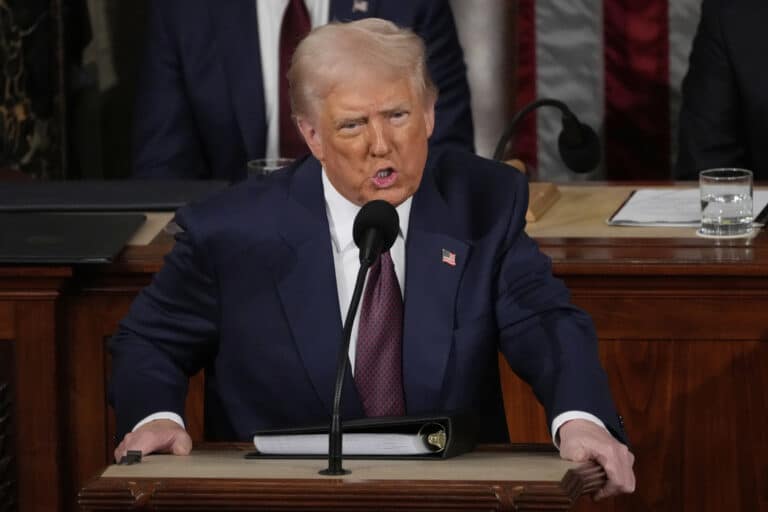
When US President Donald Trump said the value of the US Dollar is “great,” the comment sounded confident, even reassuring. Speaking to reporters and quoted by Reuters, Trump dismissed concerns that the greenback had weakened too much, stating plainly that the dollar is “doing great.” Yet, almost immediately, financial markets appeared to disagree — and quite forcefully.
This contrast between political rhetoric and market reality is what makes Trump’s statement particularly interesting for investors, traders, and anyone following global financial trends. On the very day the comment was reported, the US Dollar Index (DXY) plunged around 1.20%, marking its worst daily performance since April 10, 2025. Even more striking, the index fell to its lowest level since February 2022, a move that caught the attention of currency markets worldwide.
At first glance, Trump’s confidence in the dollar may seem at odds with the data. However, his remarks fit a long-standing narrative. Trump has historically viewed a strong dollar as a symbol of US economic power and global dominance. In his comments, he also revisited a familiar theme: criticism of major trading partners like China and Japan. According to Trump, these countries have long attempted to weaken their currencies to gain a trade advantage — a practice he says he “fought like hell” against during his presidency.
From a macroeconomic perspective, the dollar’s recent weakness reflects a complex mix of factors rather than a single political statement. Currency values are shaped by interest rate expectations, economic growth outlooks, capital flows, and relative policy stances among major central banks. While Trump may see the dollar as strong in a strategic or symbolic sense, markets are responding to shifting fundamentals.
One of the key drivers behind the dollar’s sell-off is changing expectations around US monetary policy. Investors are increasingly pricing in the possibility that US interest rates may not remain elevated for as long as previously expected. If rate cuts come sooner or faster than anticipated, the yield advantage that has supported the dollar in recent years could erode, making the currency less attractive compared to its peers.
The daily currency heat map underscores just how broad the dollar’s weakness has been. On this trading day, the US Dollar lost ground against every major currency listed. The most notable move came against the Swiss Franc, where the dollar fell by around 1.81%, making it the weakest-performing currency in that pair. Losses were also significant against the Euro, British Pound, Japanese Yen, Australian Dollar, and New Zealand Dollar.
The strength of the Swiss Franc, often seen as a safe-haven currency, may also hint at growing caution among investors. When markets become uneasy about global growth or financial stability, capital often flows into perceived safe assets — and this can come at the expense of the US Dollar, especially if US yields are under pressure.
For traders, this divergence between political messaging and market pricing is not unusual. Politicians often focus on long-term strength, national positioning, or trade competitiveness, while markets react instantly to data, expectations, and risk sentiment. In this case, Trump’s assertion that the dollar is “great” may reflect confidence in America’s economic standing, even as traders reassess the near-term outlook for the currency.
Looking ahead, the key question is whether the dollar’s weakness represents a temporary correction or the start of a more sustained downtrend. Much will depend on upcoming economic data, signals from the Federal Reserve, and broader global developments. If US growth slows or inflation cools faster than expected, pressure on the dollar could continue. Conversely, any renewed signs of economic resilience or hawkish policy guidance could stabilize the greenback.
For now, the takeaway is clear: words alone do not move currency markets — expectations do. Trump may believe the US Dollar is in great shape, but the market is sending a message of its own, one that traders will continue to watch closely in the days and weeks ahead.
Source: FXStreet
More News
Japan’s Tokyo CPI Cools Sharply in January, Raising Fresh Questions Over BoJ Policy Path
Tokyo Inflation Slows to 1.5%, Putting BoJ Rate Outlook Back in the...
GBP/USD Breaks Four-Year Highs as US Dollar Weakens and Markets Ignore Fed Calm
GBP/USD Explodes Higher as Dollar Cracks and Cable Hits 4-Year Highs. Source :...
EUR/USD Rallies Toward 1.1870 as Dollar Slumps on Geopolitical Tensions and FX Intervention Talk
Dollar Shaken by Geopolitics, EUR/USD Jumps Toward 1.1870Source :...
USD/JPY Climbs Toward 158.50 as Softer Japan Inflation Puts Focus on BoJ Decision
USD/JPY Rises Near 158.50 as Yen Softens Ahead of BoJ VerdictSource :...
GBP/USD Trades Sideways Above 1.3400 as Markets Brace for Key US PCE and GDP Data
GBP/USD Stalls Above 1.3400 Ahead of US Inflation and Growth DataSource :...
Gold Retreats Below $4,800 as Risk Appetite Improves After Trump Eases Europe Tariff Threat
Gold Slips Under $4,800 as Trump Signals Truce on Europe Trade TensionsSource...
USD/JPY Slips Toward 155.00 as BoJ Rate Hike Bets Grow and US Data Takes Center Stage
USD/JPY Weakens Near 155 as BoJ Hike Bets Clash With Key US Data.Source :...
USD/JPY Slips Below 153.00 as Markets Weigh Fed and BoJ Decisions Amid Renewed US-China Trade Optimism
USD/JPY Dips as Trade Hopes Meet Fed and BoJ Policy Uncertainty.Source :...
Japan’s Tokyo CPI in Focus: Inflation Data Could Set the Tone for USD/JPY Moves
Tokyo CPI Data Looms, USD/JPY Tests Critical 150 Threshold. Source :...
GBP/USD Slides Below 1.38 as Risk Aversion Lifts Dollar and Markets Brace for US Data Flood
Pound Falls Sharply, Dollar Gains as Markets Eye Key US DataSource :...